In brief
Brazil's President Luiz Inácio Lula da Silva stated in a BBC interview that he has \"no relationship\" with US President Donald Trump, criticizing Trump's 50% tariffs on Brazilian goods as political and harmful to consumers. Lula described the communication between them as broken, and he condemned the lack of constructive dialogue, asserting that he never attempted to reach out to Trump due to the latter's disinterest in conversation. Lula also discussed his relations with other world leaders and his stance on global issues, including the United Nations and the ongoing conflict in Ukraine.
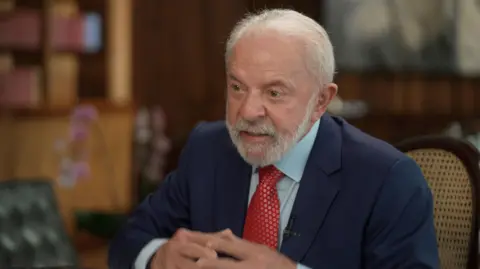
Brazil's President Luiz Inácio Lula da Silva has told the BBC in an exclusive interview that he has no relationship with US President Donald Trump. Lula has frequently criticised Trump, but this is the clearest signal yet that he thinks communication between him and his US counterpart is now broken.Even though the US has a trade surplus with Brazil, Donald Trump imposed 50% tariffs on Brazilian goods in July, citing the trial on coup charges of Brazil's right-wing former president Jair Bolsonaro as a trigger. Lula described the tariffs as eminently political and said US consumers would be facing higher prices for Brazilian goods as a result.The tariffs imposed by Trump have hit Brazilian exports to the US, like coffee and beef, which Lula said would become more expensive: The American people will pay for the mistakes President Trump is incurring in his relationship with Brazil.The two leaders have never spoken directly to each other. When pressed on why he had not just tried to pick up the phone or form a relationship, President Lula said: I never tried that call because he never wanted to have a conversation.Trump has previously said that Lula can call him anytime. But Lula insisted that members of the Trump Administration do not want to talk.He told the BBC that he had found out about the US tariffs from Brazilian newspapers. Referring to Trump, he said that the US president didn't communicate in a civilised manner. He just published them [the tariffs] on his portal - on social media.When asked how he would describe his relationship with his US counterpart he simply said: There's no relationship.Lula stated that his poor relations with the US leader were the exception, listing how he had built relationships with former US presidents, UK prime ministers, the EU, China, Ukraine, Venezuela, and all the countries in the world. He even commented on attending the World War Two anniversary celebrations in Russia this year and affirmed that he had not severed ties with President Putin. He expressed a better relationship with Putin than Trump, justifying the relationship they formed when they were both presidents at different times.Lula was forthcoming about his thoughts on Trump, stating, I don't have a relationship with Trump because when Trump was elected the first time, I wasn't president. His relationship is with Bolsonaro, not Brazil. He further suggested that if they crossed paths at the upcoming United Nations General Assembly, he would greet Trump as a civilised citizen, but asserted that Trump is not emperor of the world!In the interview, Lula also addressed the verdict against his predecessor, Jair Bolsonaro, emphasizing the judicial actions against him and condemning Trump for misunderstanding Brazil's political landscape. He described the Capitol riots of January 6, 2021, and stated that had they occurred in Brazil, Trump would be facing trial. Lula ended the interview by critiquing the UN's structure and highlighted the necessity of reform for a more democratic system.