
In brief
In the aftermath of relentless bombardments in Gaza, rescue workers of the Civil Defence reveal the profound psychological effects of their jobs, enduring unimaginable losses while working under dire conditions. Many lack access to necessary mental health support, grappling with the trauma of their experiences as they continue to search for the missing amid the ruins.
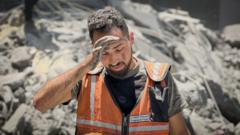
The article text:Rescue worker Abdullah al-Majdalawi, stationed in Gaza City, encapsulates the essence of despair felt by many Civil Defence operatives: "I have become afraid of my own memories." Over the 15-month span of continued Israeli bombardments, these dedicated workers have tragically witnessed firsthand the devastation and loss of life, often using their own worn orange vests to cover the bodies of fallen colleagues during funerals. The vests symbolize their sacrifice, marked by both dust and blood, serving as a tribute to their commitment to saving others while risking their own lives.On the first official day of peace, the Civil Defence agency reported the staggering loss of 99 workers killed and over 319 injured, some suffering from life-altering injuries. Nooh al-Shaghnobi, a 24-year-old rescue worker, explained that vesting a deceased colleague in their orange gear signifies that they "sacrificed his soul in it," a reflection of honor amid grief.According to figures provided by the Hamas-run health ministry, Israeli strikes have resulted in the deaths of over 47,000 Palestinians, predominantly women and children, while numerous more are unaccounted for beneath the debris. Despite a fragile ceasefire achieved last weekend, the challenge ahead is daunting as the agency estimates more than 10,000 individuals remain buried. Using limited resources and relying on the input of local residents, current rescue efforts face the grim task of uncovering bodies in decimated areas.Amidst the wreckage, Al-Shaghnobi describes a haunting incident where he was able to rescue a child from the rubble while encountering the bodies of other victims, an experience so painful it has led him to suffer deep emotional strain. He expressed, "I have seen 50 of my colleagues die in front of me." While some Israeli hostages have recently been released, an extensive support system, including psychological aid, waits for them. In contrast, many Civil Defence workers in Gaza languish without access to mental health support, resulting in internal battles against their experiences. Mohammed Lafi, a 25-year-old colleague, shared his torment over recovering the remains of children, paralleling them to his own son's age, emphasizing the lack of attention to their psychological needs.Abdullah al-Majdalawi articulates the ongoing trauma: "I am very solitary now... but I feel that my whole body is becoming tight, and I need some kind of therapy." Despite being hailed as heroes from outside Gaza, he reveals that they are silently battling their psychological wounds.Reports highlight the slow recovery processes as Civil Defence, equipped only with basic hand tools and a scarcity of machinery, aims to recover the deceased within 100 days, a target impeded by logistical challenges. Mahmoud Basal, the agency's spokesperson, acknowledged the grim reality faced by recovery teams amid widespread destruction.Families searching for lost loved ones sift through human remains while holding onto hope and memories. Ali Ashour speaks of his son Mahjoud, while Nisreen Shaaban yearns for her son Moatassem, excluding the reality surrounding them, pushing through pain in the search for loved ones. In the face of overwhelming grief, Al-Shaghnobi asserted, "These people need to be found and honoured. This work awaits us." Despite their resilience in navigating overwhelming devastation, the workers stand in need of adequate support and resources to continue their humanitarian efforts amid the countless shadows cast by destruction.

