
In brief
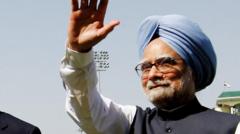
Former Indian Prime Minister Manmohan Singh, who served from 2004 to 2014, is being honored for his significant contributions to India's economic liberalization and democracy. His bold initiatives during financial crises and the introduction of key democratic laws changed the nation’s growth trajectory and social welfare landscape.
Former Indian Prime Minister Manmohan Singh, who passed away on Thursday evening, is being remembered for his substantial contributions to the country during his tenure from 2004 to 2014. Often hailed as the architect of India's economic liberalization, Singh’s policies transformed India's economic landscape and significantly improved the lives of millions.Singh began his influential career in 1991 when he was appointed as the finance minister during a dire economic crisis. With foreign reserves depleting, he led crucial reforms, including currency devaluation, reduced tariffs, and privatization of state-owned enterprises. His famous assertion in parliament that "no power on Earth can stop an idea whose time has come" exemplified his determination to reform India's economy. These actions not only steered India out of the financial crisis but laid the groundwork for it to become one of the fastest-growing major economies globally.In the 2004 elections, Singh unexpectedly became Prime Minister when Sonia Gandhi, the Congress chief, recommended him over herself as a consensus candidate. Despite criticisms alleging he was a puppet of the Gandhi family, Singh focused on governance and solidified his authority during his first term. Under his leadership, India's GDP averaged an impressive 8% growth. His role in shielding India from the 2008 global financial crisis further solidified his economic credentials, although his second term was marred by corruption accusations against certain ministers.Singh was also pivotal in enhancing Indian democracy through several significant legislations. He championed the right to information, rural employment schemes that secured job opportunities, and the Right to Education, which drastically reduced dropout rates in schools. The introduction of the Aadhar project aimed to promote financial inclusiveness and efficient delivery of welfare.In a historic move, Singh offered a formal apology in 2005 for the anti-Sikh riots of 1984, making him one of the few leaders to do so within parliament. His gesture aimed to acknowledge and heal the wounds inflicted upon the Sikh community during that tumultuous period.Singh's government was also marked by the signing of a critical nuclear deal with the United States in 2008, seeking to break India’s nuclear isolation post-1998 tests while promising civilian nuclear trade that would cater to India’s growing energy needs. Despite facing significant opposition, Singh insightful navigation ensured both the deal and his government endured.Manmohan Singh’s legacy as a reformist leader and an embodiment of integrity continues to inspire discussions on economic policy and governance in India. His hope that history would judge him favorably reflects his commitment to the nation and its people.

