
In brief
Indigenous groups in Colombia are grappling with the impacts of wind farms on their way of life as the country seeks sustainable energy solutions, sparking community division and cultural challenges.
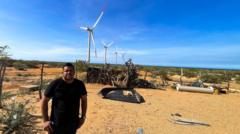
When José Luis Iguarán stands outside his home in La Guajira, northern Colombia, he is confronted by a line of ten towering wind turbines stretching across the arid landscape toward the Caribbean Sea. This area, inhabited by the Wayuu indigenous group for centuries, has become a focal point in Colombia's transition from fossil fuels to renewable energy, particularly in the face of some of the country’s most powerful winds."Now, when I wake up, I see these turbines instead of trees," Mr. Iguarán laments, highlighting a tension between modern energy aspirations and the traditional lifestyle of the Wayuu, who have historically herded goats, cultivated crops, mined salt, and fished. He voices concerns about the noise from the turbines disrupting sacred dreams, which serve as a bridge to the spiritual realm for the approximately 380,000-strong community.Despite these cultural disruptions, Mr. Iguarán acknowledges some benefits brought by Guajira 1, one of Colombia's first operational wind farms. The energy firm Isagen, owned by Canada's Brookfield, has provided clean drinking water, better infrastructure, and improved housing for the locals. Isagen also compensates local communities through annual fees tied to electricity revenues and carbon credits.Yet, positive sentiments shift dramatically when it comes to community relations. Aaron Laguna, a Wayuu fisherman, expresses discomfort at the internal divisions that wind projects have created. He notes that consultations for nearby wind farms often lack transparency and that resources offered to indigenous communities are mismanaged. This sentiment reflects a growing concern over inadequate compensation and the sidelining of local opinions, resulting in disputes and conflict within Wayuu communities.The overarching challenge is defining the ‘green’ energy narrative, as Joanna Barney, director at the Colombian think tank Indepaz, suggests. The absence of a robust framework for assessing both the environmental and social ramifications of these projects has raised serious questions about their sustainability. Economic viability is also in question; the Spanish firm EDP Renováveis recently suspended plans for two wind farms amid rising local opposition.Further, instances of conflict have arisen, contributing to a charged atmosphere dubbed the "wind wars,” where protests and dissatisfaction lead to roadblocks and threats against energy company personnel. Cultural misunderstandings compound these issues, as many Wayuu perceive winds as spiritual entities that demand respect, contrasting sharply with their commercial exploitation by energy firms.Currently, the Colombian government acknowledges the significance of renewable energy but nearly two-thirds of domestic electricity is generated from hydroelectric sources. Wind energy still comprises a mere 0.1% of the national energy mix, which stands in contrast to the urgent need for sustainable solutions.As energy firms like AES Colombia develop extensive wind projects in La Guajira, they claim to uphold open communication with indigenous groups. Still, they recognize that effective conflict resolution requires government intervention. Meanwhile, local populations like the one in Cabo de la Vela continue to struggle with inadequate public services, including healthcare and education.As the landscape transforms, Mr. Laguna highlights a painful reality: "We won’t receive a single kilowatt from this energy produced here," he asserts, underlining the paradox of local communities investing in renewable energy yet remaining disconnected from its benefits.In the quest for clean energy, many in the Wayuu community remain apprehensive, fearing their cultural identity and access to basic resources may be overshadowed by the promise of progress.
